
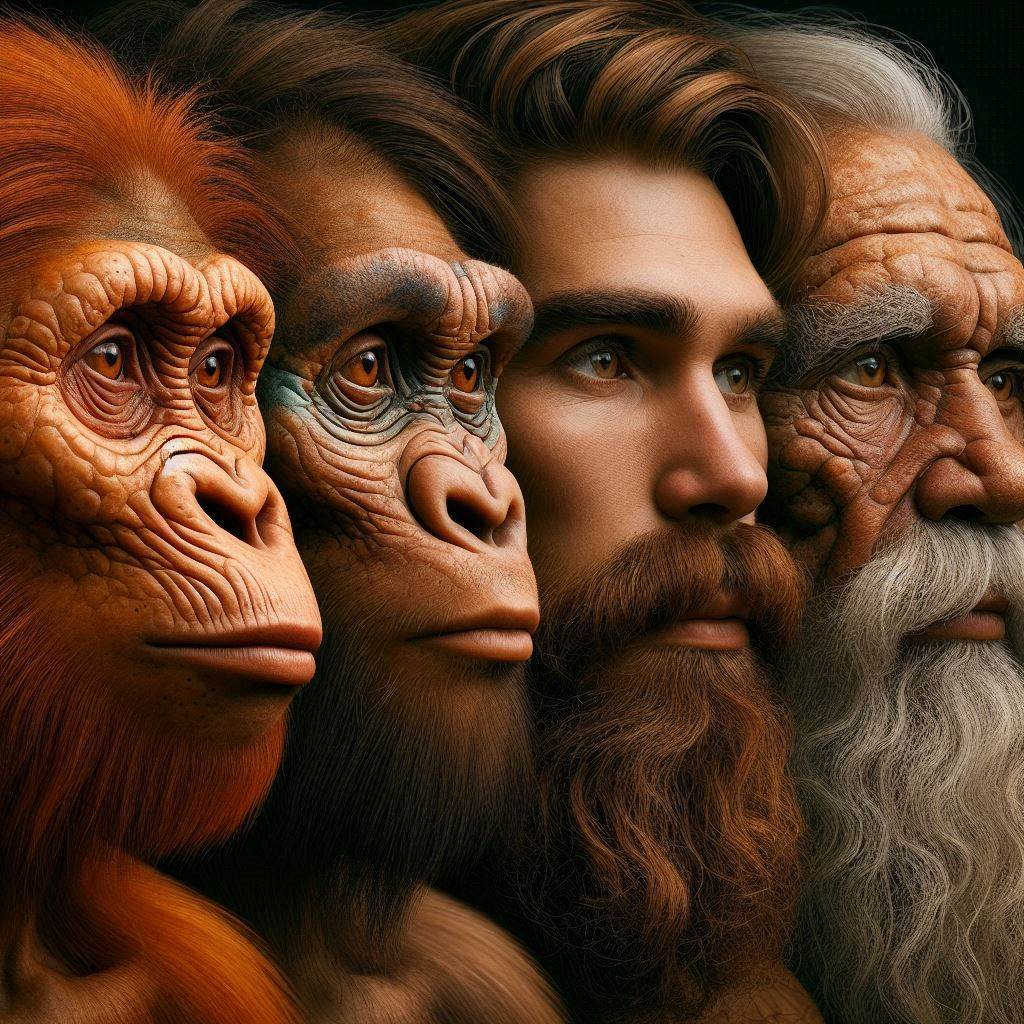
Long ago, a young girl lived in a cave in the Russian Altai Mountains. She was nearly middle-aged when she passed away from still unknown causes. Back then being in your early teens was considered middle-aged at the time as the lifespan was under 30 years old. She roamed the earth nearly 90,000 years ago, and her discovery in the modern world is a significant link in the transitional stage between Neanderthals and the Denisovans. She is a hybrid of two human species, a discovery that has captivated the scientific community.
Denisovans are a group of archaic humans who emerged on earth about 370,000 years ago during the Pleistocene Epoch and roamed in eastern and southern Asia. They disappeared about 30,000 years ago.
Neanderthals emerged into the human timeline about 200,000 years ago, also during the Pleistocene Epoch. They roamed eastward to Central Asia from the Atlantic regions of Europe and vanished between 24,000 and 35,000 years ago.
Modern humans, or Homo sapiens, have existed for nearly 300,000 years, covering both timelines of the Denisovans and Neanderthals, so it shouldn’t be a surprise that ancient Homo sapiens had interspecies relationships, which is proven as humans have up to 0.5% of both of these archaic humans in our DNA.
A team of researchers discovered the remains of the young hybrid and published their findings in Nature. This discovery not only sheds light on the existence of a hybrid human specimen but also helps fill in many gaps in our understanding of human evolution, particularly the interbreeding and coexistence of different human species.
In 2010, in a remote Denisova Cave is when the first Denisovan remains were discovered. The extreme cold of the cave preserved ancient DNA in the bone, ultimately concluding the unearthed finger belonged to an unknown human species. That simple bone turned evolutionary studies upsidedown as a brand new species was entered into the human family tree. The researchers named this new species “Denisovans” after the Russian cave where they were found.
The researchers named our hybrid girl Denisova 11, although she is only the fifth Denisovan ever found. Her discovery is fascinating, with yet unknown implications and findings once our modern equipment begins working on finding more about her. The potential of DNA sequencing shows that half of her chromosomes were similar to the other Denisovan discoveries and the other half to Neanderthals. She had parents of two different species and lived in a cave with several members of both species.
Researchers have used genetic sequencing to study ancient human remains in the past decade. These studies have proved modern humans interbred with other subspecies, such as Neanderthals and Denisovans. In 2015, a pivotal discovery was made when scientists found the remains of a 40,000-year-old modern human with a Neanderthal ancestor, significantly advancing our understanding of human evolution.
Recent findings have also revealed that people outside of Sub-Saharan Africa have traces of Neanderthal or Denisovan DNA in their genome, with variations depending on geographical locations. For example, populations in Europe and Asia have a higher percentage of Neanderthal DNA compared to those in Africa. This suggests that interbreeding between different human species was not uncommon and may have occurred more frequently in certain regions.
Furthermore, discovering a hybrid specimen among other archaic species indicates that interbreeding may have been widespread or not perceived as unusual among these groups. This challenges the idea that Neanderthals and Denisovans only interbred with a common ancestor of modern humans, as direct evidence of interbreeding between different human species has been found.
The findings raise questions about the extinction of Neanderthals and Denisovans, as interbreeding may have contributed to their eventual disappearance. While more evidence is needed to confirm this theory, the discoveries shed light on our evolutionary past and the existence of other human species alongside modern humans in Eurasia.
Since the extinction of both the Denisovans and Neanderthals, Homo sapiens have been the only remaining species of humans. It’s a sobering thought that all of our other ancestors are now extinct. We are the last of our species, and when we go extinct, no other human species will carry on the legacy of our shared history on this earth.
Life Expectancy From Prehistory
Discover more from Random Thoughts
Subscribe to get the latest posts sent to your email.
 Random Thoughts